What Are Alpha Brain Waves?
Most people have experienced a version of the same quiet moment. A good idea arrives not at a desk, not during a meeting, and not while staring at a screen with deliberate concentration. It comes in the shower. It surfaces on a walk, without warning. It floats up while looking out a window, when the mind has momentarily stopped chasing.
These experiences are so common they have become almost cliché. They also point toward a real area of research. Alpha-band activity is especially prominent during relaxed, eyes-closed wakefulness, and changes in alpha power have also been observed during some creative tasks. That does not mean alpha waves cause insight; they are one measurable feature of a much more complex process [2][6] .
This article is not really about brain waves. It is about why so much of our best thinking seems to arrive when we finally slow down, and what that says about attention, rest, and the way modern life structures our relationship with our own minds.
Understanding Brain Waves

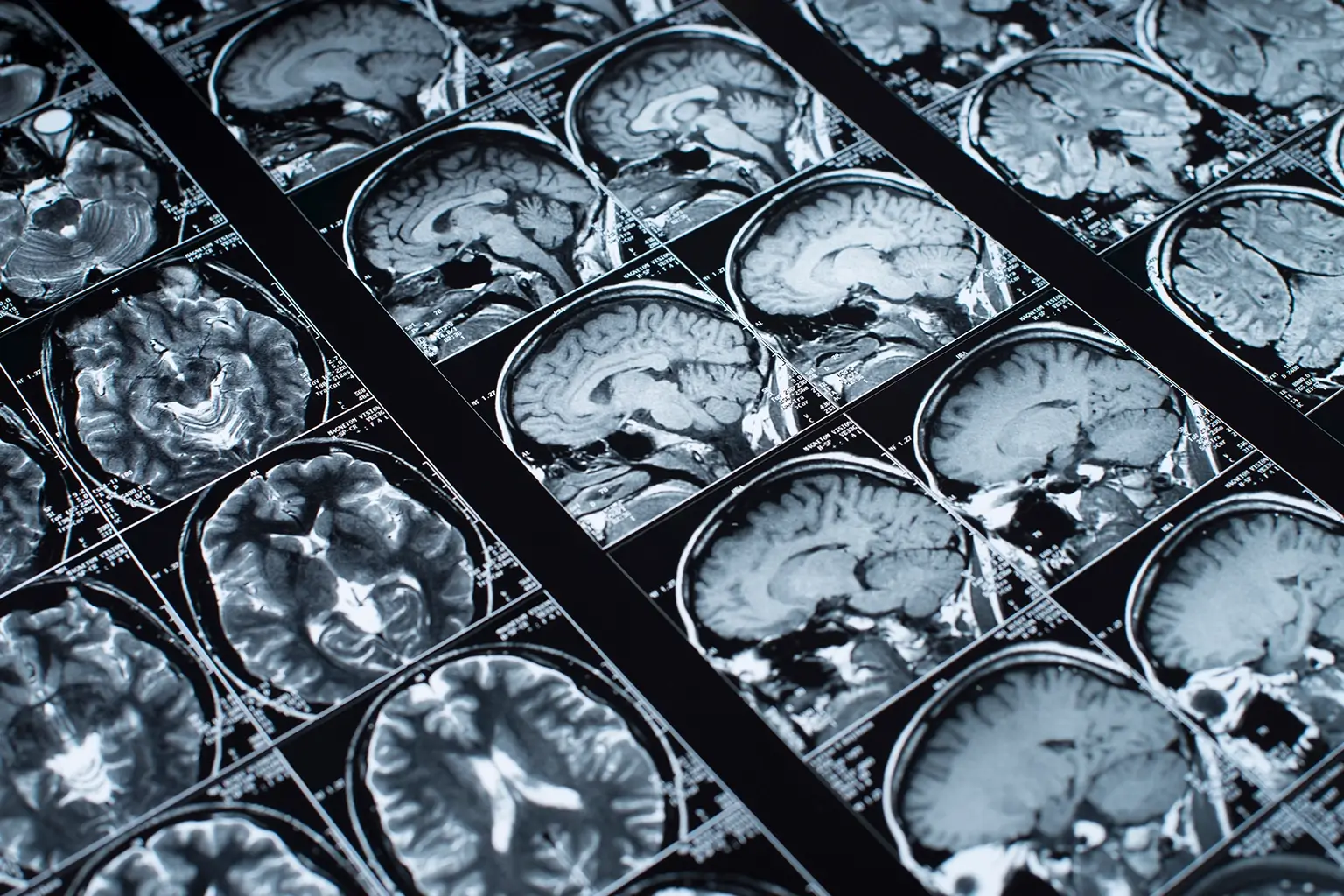
The brain is an electrical organ. Neurons communicate through electrochemical signals, and the combined activity of large populations of neurons produces rhythmic patterns that can be measured at the scalp using electroencephalography, or EEG. Researchers group these rhythms into frequency bands. The bands are useful descriptions, but they are not switches or self-contained mental states.
Several frequencies can be present at the same time, and their strength and location change with factors such as whether the eyes are open, what task a person is doing, and individual physiology. For that reason, phrases like "an alpha state" are convenient shorthand, not a literal description of the whole brain entering one mode.
Beta
Beta activity generally refers to oscillations around 13 to 30 Hz. It is often observed during alert, active cognition and movement, but beta is not a universal signature of focus. Its meaning depends on where it occurs, when it occurs, and what task a person is performing.
The popular claim that "too much beta" equals anxiety, or that modern life keeps the brain locked in a beta-dominant state, is too simple. EEG patterns are more nuanced, and a single frequency band cannot diagnose stress, focus, creativity, or any other mental state on its own.
Alpha
Alpha activity is usually defined as oscillations around 8 to 12 Hz, although exact boundaries vary by study. It is especially prominent during relaxed wakefulness with the eyes closed and typically changes when the eyes open or attention shifts to a task. Hans Berger described this rhythm in the first human EEG reports in the 1920s [1] .
Alpha was once treated mainly as an idling rhythm, but research now suggests a more active role. Alpha activity may help regulate cortical processing by suppressing irrelevant sensory input and controlling access to stored information [6] . It often accompanies relaxed wakefulness, but it is not a guaranteed marker of calmness or creativity.
Theta
Theta activity is generally grouped around 4 to 8 Hz. It can appear during drowsiness and sleep, but it also participates in awake processes such as memory and cognitive control. Its meaning depends on where and when it is measured; it is not simply a "meditation frequency" or a creativity setting.
Delta
Delta activity generally refers to frequencies below about 4 Hz and is prominent during deep non-REM sleep. It can also appear in other contexts. Calling delta a "healing mode" goes beyond what an EEG frequency band can establish.
Why Researchers Became Interested in Alpha Brain Waves
Interest in alpha grew as researchers learned that it changes reliably with sensory input and attention and is not merely idle background activity. Reviews describe roles in inhibiting competing information and regulating access to stored information [6] . A separate body of research on mindfulness often reports changes in alpha and theta activity, although methods and results vary across studies [3] .
Creativity research adds another layer. A major review described increased alpha power during creative ideation as one of the more consistent EEG findings in the field, especially when tasks require internally directed attention. Even so, the studies are correlational or task-based; they do not show that deliberately increasing alpha will make someone more creative [2] .
The most defensible interpretation is that alpha is one marker within a network of processes involved in attention and idea generation. In some tasks, increased alpha may reflect the brain shielding internally directed thought from distraction. In other tasks or brain regions, alpha decreases as processing increases. "More alpha is better" is not a valid general rule [2][6] .
Creativity Is Often Discovered Rather Than Forced

This brings us back to the shower, the walk, the window. These moments share a common structure. In each case, the brain has stepped away from focused, goal-directed attention. External demands have temporarily receded. The mind, no longer tasked with solving a specific problem, begins to wander.
For many people, this is when a solution to a difficult problem appears. That experience is compatible with incubation: focused work frames the problem, and a later break changes the attentional context. Unless EEG was actually measured, however, we cannot know that an "alpha-rich pause" caused the idea.
This is why the phrase "creativity is often discovered rather than forced" still matters. It is not an argument against hard work or deep concentration. Focused effort builds knowledge and defines the problem. A lower-demand period may then help a person return with a different perspective. Relaxed attention can complement deliberate work; it does not replace it.
More stimulation does not automatically produce better thinking. The evidence supports a balanced claim: creative work can benefit from both sustained engagement and lower-demand periods. It does not support labeling one frequency band "productive" and another "creative."
Why Modern Life Can Crowd Out Incubation
Notifications, messages, and endless streams of information make it easy to move from one demand to the next with few unfilled moments. That matters because creative thinking often needs both input and time away from input. It does not mean digital life locks the brain into beta activity.
Low-stimulation pauses can also become scarce by habit: a free minute is filled with a feed, a podcast, or another task. The useful point is not to make a sweeping historical claim about how much quiet people once had. It is simply that modern routines can leave less room for reflection, mind wandering, and incubation.
When every pause is filled, people may lose opportunities to step back from a problem and see it differently. That is a practical hypothesis, not proof that a shortage of alpha waves is a structural cause of creative blocks.
This is not an argument for abandoning technology. It is an argument for creating some intentional space around demanding work. A blank moment between tasks, a quiet drink, or a walk without headphones may support the creative process, even though no one can infer a person's EEG pattern from the activity alone.
How to Create More Space for Better Thinking

If creativity is often discovered rather than forced, the practical question is how to make room for both concentration and incubation. The answer is not to stop working hard. It is to pair focused effort with genuine pauses, which are periods of lower demand in which attention can loosen before returning to the problem.
Morning Rituals
Morning is not inherently an alpha-rich or more creative time. It can simply be a useful window when the environment is quieter and fewer demands have accumulated. Journaling, reading, or sitting with a warm drink before opening email can preserve a short period of internally directed attention. If mornings are hectic, the same principle can be applied at another time of day.
Walking
Walking has stronger behavioral evidence than many popular brain-wave claims. In a series of experiments, participants generated more novel uses for ordinary objects while walking than while sitting, although walking did not improve every type of problem solving [5] . The study did not establish alpha activity as the mechanism. The practical value may be simpler: walking changes the context, reduces task fixation, and creates room to generate alternatives.
Silence and Reflection
The constant availability of podcasts, music, video, and messages means even solitary moments can be filled with input. Choosing ten or fifteen minutes without added media can create a genuine break. There is no basis for promising that silence will produce a beta-to-alpha shift without EEG measurement, but reflection or journaling can still be useful ways to give an unfinished idea room to develop.
Deep Work Paired with Intentional Breaks
Creative work often alternates between sustained concentration and genuine disengagement. Focus is important for mastering complex material and framing a problem clearly. A break can then serve as an incubation period, allowing a person to return with less fixation and a fresh perspective. That does not require claiming that the brain is literally solving the problem outside awareness or that alpha activity is responsible.
The Role of Ingredients That May Support Calm Focus
This is where the conversation circles back to L-theanine, an amino acid found in tea. Small human studies have reported changes in L-theanine and alpha-wave activity after isolated L-theanine was consumed under resting or passive-attention conditions [4] . These findings do not establish a guaranteed onset time, a creative benefit, or the same effect at every dose or in every formulation.
The finding does not show that L-theanine causes creativity, makes insight more likely, or works as a cognitive enhancer. Research on an isolated ingredient also cannot be assumed to establish the effect of a finished beverage containing other ingredients.
Symvia Rise combines caffeine with L-theanine and is formulated around the idea of calm focus. Research on the individual ingredients does not establish that the finished beverage increases alpha waves or creativity. Within a broader routine, it can serve as a simple ritual alongside focused work, intentional breaks, and other habits that create a steadier rhythm for the day. Readers interested in botanical support for fatigue under demand may also explore Rhodiola’s research on fatigue and focus .
Calmness and Creativity Are Often Connected
Calmness and creativity may overlap in some contexts, but the relationship is not simple. Creative work also depends on knowledge, motivation, executive control, mood, and the demands of the task. Alpha activity is one piece of that picture, not a biological explanation for creativity as a whole [2] .
The brain continually changes its patterns of activity as attention, sensory input, and task demands change. The evidence does not support a rigid cycle between "focused beta" and "creative alpha." Still, alternating focused work with lower-demand periods is a practical way to change perspective and reduce fixation.
When a person feels stuck, adding more effort and input is not the only option. Walking, pausing, or returning later may help change the attentional mode. It is an option, not a guarantee, and it should not be reduced to the pursuit of a particular brain-wave reading.
The shower insight, the walking idea, and the solution that arrives while looking out a window are not direct evidence of a specific brain-wave mechanism. They are useful reminders that stepping away can be part of serious creative work. Respecting that need for a break is not laziness or avoidance.
Conclusion
Alpha-band activity is reliably associated with relaxed, especially eyes-closed wakefulness and appears to help regulate the processing of relevant and irrelevant information [6] . Studies of creative ideation also often report task-related increases in alpha power [2] . The relationship is not causal, and it varies by task, brain region, and person.
The practical takeaway is modest: protect some lower-stimulation time and pair it with focused effort. Quiet does not guarantee insight, and alpha waves are not a creativity switch. But concentration and disengagement can both be valuable parts of a thoughtful creative process.
Frequently Asked Questions
- What are alpha brain waves?
- Alpha waves are EEG rhythms usually grouped around 8 to 12 Hz. They are especially prominent during relaxed wakefulness with the eyes closed, but exact boundaries and patterns vary across people and tasks.
- What do alpha brain waves do?
- Alpha activity does not have one single job. Research suggests it helps regulate cortical processing, often by suppressing irrelevant input and changing how attention accesses stored information.
- Are alpha brain waves associated with creativity?
- Yes, some creative-ideation tasks are accompanied by increased alpha power. The relationship depends on the task and brain region, and it does not show that alpha causes creativity or that more alpha is always better.
- Can meditation increase alpha brain wave activity?
- A systematic review found that mindfulness practice was commonly associated with enhanced alpha and theta activity compared with eyes-closed control conditions, but methods and findings varied. This does not mean meditation universally raises alpha or that higher alpha is inherently better.
- What is the difference between alpha and beta brain waves?
- They are different EEG frequency ranges: alpha is usually about 8 to 12 Hz, while beta is roughly 13 to 30 Hz. Both can coexist, and neither maps cleanly onto a single mental state. Their meaning depends on location, timing, and task.
- Does L-theanine affect alpha brain waves?
- Small human studies have reported changes in alpha-band activity after isolated L-theanine, but the evidence does not establish a guaranteed effect, creative benefit, or the same result for every dose or finished product.
Sources
- Berger, H. (1929). Über das Elektrenkephalogramm des Menschen. Archiv für Psychiatrie und Nervenkrankheiten, 87(1), 527–570.
- Fink, A., & Benedek, M. (2014). EEG alpha power and creative ideation. Neuroscience & Biobehavioral Reviews, 44, 111–123.
- Lomas, T., Ivtzan, I., & Fu, C. H. Y. (2015). A systematic review of the neurophysiology of mindfulness on EEG oscillations. Neuroscience & Biobehavioral Reviews, 57, 401–410.
- Nobre, A. C., Rao, A., & Owen, G. N. (2008). L-theanine, a natural constituent in tea, and its effect on mental state. Asia Pacific Journal of Clinical Nutrition, 17(S1), 167–168.
- Oppezzo, M., & Schwartz, D. L. (2014). Give your ideas some legs: The positive effect of walking on creative thinking. Journal of Experimental Psychology: Learning, Memory, and Cognition, 40(4), 1142–1152. https://doi.org/10.1037/a0036577
- Klimesch, W. (2012). Alpha-band oscillations, attention, and controlled access to stored information. Trends in Cognitive Sciences, 16(12), 606–617.